Tuesday, October 3, 2017

Scotland Day 7: Highland Folk Museum and Cairn Gorm


The weather was good again today — windy but clear. We had a sprinkling of rain on the drive, but were rewarded by a fantastic rainbow. 


From Stirling, we drove to the Highland Folk Museum in Kingussie. It’s a mile-long open-air museum, and the most interesting part for us was the reproduction of an early 1700s rural Highland township. The township has six buildings to explore, all with sod walls and thatched roofs. 

A woman in period costume stood outside, carding and spinning wool, and was on hand to answer questions. She was cheery and informative, and let me touch the wool, which was very soft. She said the women used a drop spindle to hand-spin the yarn, because they couldn’t be sitting at a spinning wheel when there were other chores to do! I guess multitasking was a thing, even back then.

Our next stop was Cairn Gorm (An Càrn Gorm, in Gaelic, meaning Blue Mountain), a mountain in the Highlands overlooking the town of Aviemore. It is 1,245 metres (4,084 ft) high, making it the sixth-highest mountain in the UK. It’s a popular area for skiing and hiking, although prone to dangerously high winds. 

We rode the funicular railway up the north side of the mountain to the restaurant complex, some 1,000 metres up. We had tea and goodies, then went outside onto the viewing terrace, and were just about blown off our feet!! Fred couldn't hold his camera still enough to take a photo! The view was wonderful though. I can just imagine how it would be in spring, with the heather in bloom, on a sunny day when you could clearly see the lake below. 


I shot a little video on the way down; you can check it out  here.

After the mountain, we drove to Inverness and checked in at the Gatehouse B&B. We were craving some hot comfort food, after the chilly winds on the mountain. We decided on the Castle Tavern, which was built in the mid-1700s, and overlooks the River Ness and Inverness Castle.

We shared delicious haggis bon bons in a grain mustard sauce. I had carrot-yam soup, and Fred had Cullen Skink — a very tasty Scottish cream soup made of smoked haddock, potatoes, and onions. I didn’t take the camera with me, but you can google Cullen Skink!


Monday, October 2, 2017

Scotland Day Six: Alva, Tillicoultrey, and Stirling Castle

This would have been a familiar view to Fred's ancestors


Another full Scottish breakfast this morning. I'm sure going to miss that when we go home and I get back to my usual oatmeal-granola-yogurt in the morning. ;)


After breakfast, we drove to Alva, a little village nestled under the Ochil Hills. This area is where a long line of Fred’s ancestors lived, from the late 1600s till the mid 1800s. We visited the old St. Serf’s kirkyard where one of those ancestors is buried (Fred found the headstone in a previous visit more than 20 years ago) but this time we weren’t able to find it. Our search was a bit rushed because of the “entry prohibited” signs posted by the local Council, allegedly due to the danger of old headstones falling over onto people (really).


We then drove the few miles to neighbouring Tillicoultry, where Fred’s earliest-known ancestor had a farm, and died in 1681. The old graveyard was largely covered by later development, only a small section remains with a handful of very old, very weathered grave markers. It was still very cool to be standing in a place where our people lived and worked, so long ago. It’s a beautiful spot too.


After Tillicoultry, we visited Stirling Castle, which was just wonderful! The tour guide was hilarious -- when he was describing various battles, he would just suddenly erupt in shouts of BANG!! BANG!!! BANG!!!! He was very informative, and it was a great tour.


Stirling Castle is one of the largest and most important castles in Scotland, both historically and architecturally. The castle sits atop an intrusive crag, and is surrounded on three sides by steep cliffs, giving it a strong defensive position.


There have been at least eight sieges of Stirling Castle, including several during the Wars of Scottish Independence, with the last being in 1746, when Bonnie Prince Charlie unsuccessfully tried to take the castle. Before the union with England, it was also one of the most used of the many Scottish royal residences. Several Scottish Kings and Queens have been crowned at Stirling, including Mary, Queen of Scots, in 1542.

After the tour, we walked through the various rooms and displays ourselves. They are working on restoring the castle and bringing it back to how it may have looked in its 16th Century prime. For example, weavers worked on tapestries for years, using the old techniques, recreating the originals. Just amazing, gorgeous work. You can view a two-minute time lapse video of  a weaver working on one of the tapestries here.


And carvers recreated the 37 "Stirling Heads", which were 16th Century carvings of historical figures. The originals are on display behind glass, but the newly carved and painted ones are up on the ceiling in the King's Inner Hall, after six years of restoration work. There's a good article about it here.


So it was another fascinating day! After the castle, we stopped in the old part of Stirling and had tea and cake. On the way back to our B&B, we stopped at the pub and dropped off the umbrella we borrowed in last night's deluge. Of course we stayed for a pint. 


Sunday, October 1, 2017

Scotland Day Five: The Falkirk Wheel

Notice the orange tour boat about to be lifted.


Our day started, as it did yesterday, with the hotel breakfast buffet and a visit from Mary the cat. The lady on the front desk told me they have some repeat guests who specifically book ground-floor rooms so they can visit with Mary. They bring her treats and toys, and even let her in their room.

After checking out, we drove to Falkirk to see the Falkirk Wheel — a rotating boat lift that connects the Forth and Clyde Canal with the Union Canal. It’s an engineering marvel with an ingenious design, completed in 2002 as part of an ambitious project to restore Scotland’s historic canal system. The wheel raises boats by 24 metres (79 ft). The Falkirk Wheel is the only rotating boat lift of its kind in the world.

We boarded the Archimedes, one of two tour boats that take visitors through the lift and up to the aqueduct, then back again. It’s interesting that you don’t really get a sensation of moving — it goes quite slowly, your boat is still floating in water, and you are always level.

It was a cloudy day, but when the visibility is better, I’m sure the view from the top of the lift is spectacular.

After completing the tour, we had tea and cake in the café, then walked one of the trails that leads to the Rough Castle Fort, a Roman fort on the Antonine Wall. It was a damp and wind-blown hike, but well worth it.

The Antonine Wall was built around 143 AD and marked the farthest frontier of the Roman Empire. The wall (mostly an earthwork) stretched across the narrowest part of Scotland from Bo'ness on the River Forth to Old Kilpatrick on the River Clyde. The fort is the best preserved of the 19 forts constructed along the length of the Wall. Built against the southern rear face of the Wall, the fort was defended by six-metre thick turf ramparts and surrounded by defensive ditches.

Orange tour boat seen from above, making its way up to the aqueduct
Lilias -- defensive pits that once contained sharpened stakes


A feature of the defences at the fort is a series of pits lying to the north west of the causeway across the Antonine ditch. These pits, known as lilias, would originally have contained sharpened stakes at the bottom. The lilias were positioned to help defend the vulnerable northern gateway through the Wall. 

Next, we drove to Stirling and checked into the Coralinn Bed & Breakfast. After settling in, we identified a nearby restaurant and set out on foot. That’s when the rain started in earnest. And the wind. We were soaked in no time. To make matters worse, we couldn’t find the place, despite the fact that its address is on the same street as our accommodations.

So we gave up and ducked into a pub, only to find that they don’t serve food. They told us how to get to the restaurant (which is set back from the street and easily missed), gave us a cloth to dry our heads, and even loaned us an umbrella.

The Hollybank Restaurant was great — we had a very nice meal, and I continued my quest for the ultimate haggis. This one was battered haggis-stuffed chicken goujons, served with a pepper cream sauce. They were light, delicate, and delightful.

The rain had slowed down by the time dinner was over, but we were still damp and chilled. I decided to have a shower -- another opportunity to navigate the intricacies of Scottish plumbing!


Saturday, September 30, 2017

Scotland Day Four: National Museum and Spamalot


We were delighted to learn that our hotel buffet breakfast comes with a cat. She's a long-haired beauty named Mary, who has shown up at the window just above the buffet every day for years. Today she managed to sneak in through the window, hop onto the buffet table, and then to the floor. We all enjoyed petting her for a while, then the Spanish waiter escorted her "afuera" (outside).

We walked to the National Museum of Scotland in the late morning, and spent all day there. We covered the geological history of Scotland (fascinating!), the Galloway Hoard, Bonnie Prince Charlie and the Jacobites, an old loom, an old steam engine, Roman pottery, enormous swords, a 1599 rifle, beautiful carved wood from St. Giles church, Viking silver, and much more.

Dinner was to be at a tapas restaurant that features haggis arepas, but they were unexpectedly closed. Instead, we chose a little pub across the street from King's Theatre, a historic and beautiful theatre that opened its doors in 1906. And that's where we saw the musical Spamalot, which was absolutely wonderful! We loved the actors, the music, the voices -- really the whole thing was just a delight. And we were fortunate to have seats in the seventh row. Fantastic seats and a wonderful evening.

Edited to add that the next morning, we read that some fellow had been stabbed in a gang-related attack right outside the theatre the night before we went. Glad we didn't know that, because at the time, we felt quite safe walking there and back!


Friday, September 29, 2017

Scotland Day Three: Melrose Abbey, Edinburgh Castle


After an elegant and delicious breakfast at our B&B, we headed out to Melrose to see another abbey from the 12th century. This one was founded in 1136 by Cistercian monks, built in the Gothic style, in the form of a St. John's cross.

A lead container believed by some to contain the heart of Robert The Bruce was found in 1921 below the Chapter House site. The abbey is also known for its many gargoyles and other ornate figures.

After Melrose, we visited Fred's cousin Morag. Unfortunately, she was ill and couldn't receive us. So we had a brief chat at the door, then left for Edinburgh. Once we were checked in and settled, we set out on foot for Edinburgh Castle.

St. Margaret's Chapel from the outside
We started out with a little guided tour, so we would know what areas we wanted to see in depth. We saw the Stone of Destiny and the Crown Jewels (no photos allowed), and the wonderful Scottish National War Memorial, which is a solemn and beautiful building that houses books containing the names of those who fought and died for Scotland in any wars. Fred looked in the book for the Gordon Highlanders and found his relative's name.


St. Margaret's Chapel -- the oldest building on the castle site -- was beautiful inside, with delicate stained glass windows (added in the 1920s) and a small altar.  It dates to the reign of King David I (1124-1153), who built it as a private chapel for the family and dedicated it to his mother, Saint Margaret of Scotland, who died in the castle in 1093. The chapel is still used for religious ceremonies, such as weddings.

Next, we walked through the prisons of war and the National War Museum. It was a super interesting visit!

On the way back to the hotel, we stopped at the Theatre Royal Bar and had some dinner. Keeping my promise to have haggis every day, I ordered delicious spheres of haggis stuffed with camembert. Crispy on the outside, molten on the inside, and so delicately flavoured -- delectable!!!


Here are three stained glass windows from the St. Margaret's Chapel. They were added some time in the 1920s.


Thursday, September 28, 2017

Scotland Day Two: Kelso

Fred with Cousin Ken and his lovely wife Pat, outside their home in Kelso


We started the day with a delicious full Scottish breakfast at our B&B in Ayr, then set out for Kelso along narrow, winding roads. The weather today is just wonderful (did I mention that it rained yesterday?), and the scenery on the drive was beautiful.

In Kelso, we visited Fred's cousin Ken and his wife Pat. They're lovely, and we enjoyed their company very much. It was only going to be a brief visit for tea, but their schedule had opened up, and we spent the afternoon together, seeing the local sights and enjoying the sunshine.

The Kelsae Stane
First, Ken and Pat treated us to a tasty lunch in Kelso, and showed us the cobblestone town square, and the Kelsae Stane -- a giant cobblestone-shaped piece of public art. The actual stone is a 33-tonne piece of basalt that came from India. Place names were hand-written by local people, then engraved on the stone. The hand-written place names were provided by people of all ages, ranging from someone who had only just started writing, to a 101-year-old.

The Kelsae Stane was carved by local sculptor Jake Harvey, Emeritus Professor of sculpture at Edinburgh College of Art, and the piece was unveiled in 2014.

After lunch, we drove to the Roxburgh Cemetery to see the headstone of Fred's mother's great-grandparents, Charles and Marion Hendry. Charles was the stationmaster at Roxburgh Station for many years. Beside that headstone was another for Charles's daughter Annie Moonlight Dagg and her husband Thomas Dagg, who was the stationmaster at nearby Maxton.

Next, we visited Jedburgh Abbey, a ruined Augustinian abbey that was founded in the 1100s and built over a period of 120 years. It's a mix of Romanesque and Gothic architectural styles, and it's huge.

Ken pointed out Jedburgh Castle and Jail, but we didn't stop. As well, we drove past the old station house, but the trees had grown up since Fred last saw it, and we weren't able to get a peek.

After saying our goodbyes, we checked in to the Duncan House B&B. We were shown to a lovely little room that would have been perfectly adequate, but then our host Kate decided to upgrade us to a larger space. And what a space! Canopy bed, enormous armoire, two big windows overlooking the River Teviot (and a telescope on a tripod to help us enjoy the view), and one looking out towards the 180-foot spire of the gothic Kelso North Parish Church, which was built in 1866, and probably still has that new church smell.

River Teviot, seen from our window at Duncan House B&B

Wednesday, September 27, 2017

Scotland: Day One in Ayr


Brig o' Doon


We arrived in Glasgow this morning, sleep deprived and hungry, and drove to Ayr right away.

In Ayr, we stopped for tea and scones (of course), then visited the Robert Burns Birthplace Museum, which includes the cottage where he was born, a 70-foot-high nine-pillared monument, gardens (yes, we stopped and smelled the roses), the 15th Century cobblestone Brig o' Doon, the Poet's Path walkway, Alloway Auld Kirk, and the museum.

It was interesting to walk through the cottage, and imagine how life there influenced Burns. For example, an aunt lived with the family, and she would tell him fanciful stories of witches and spirits, no doubt laying the groundwork for his epic poem Tam o' Shanter.

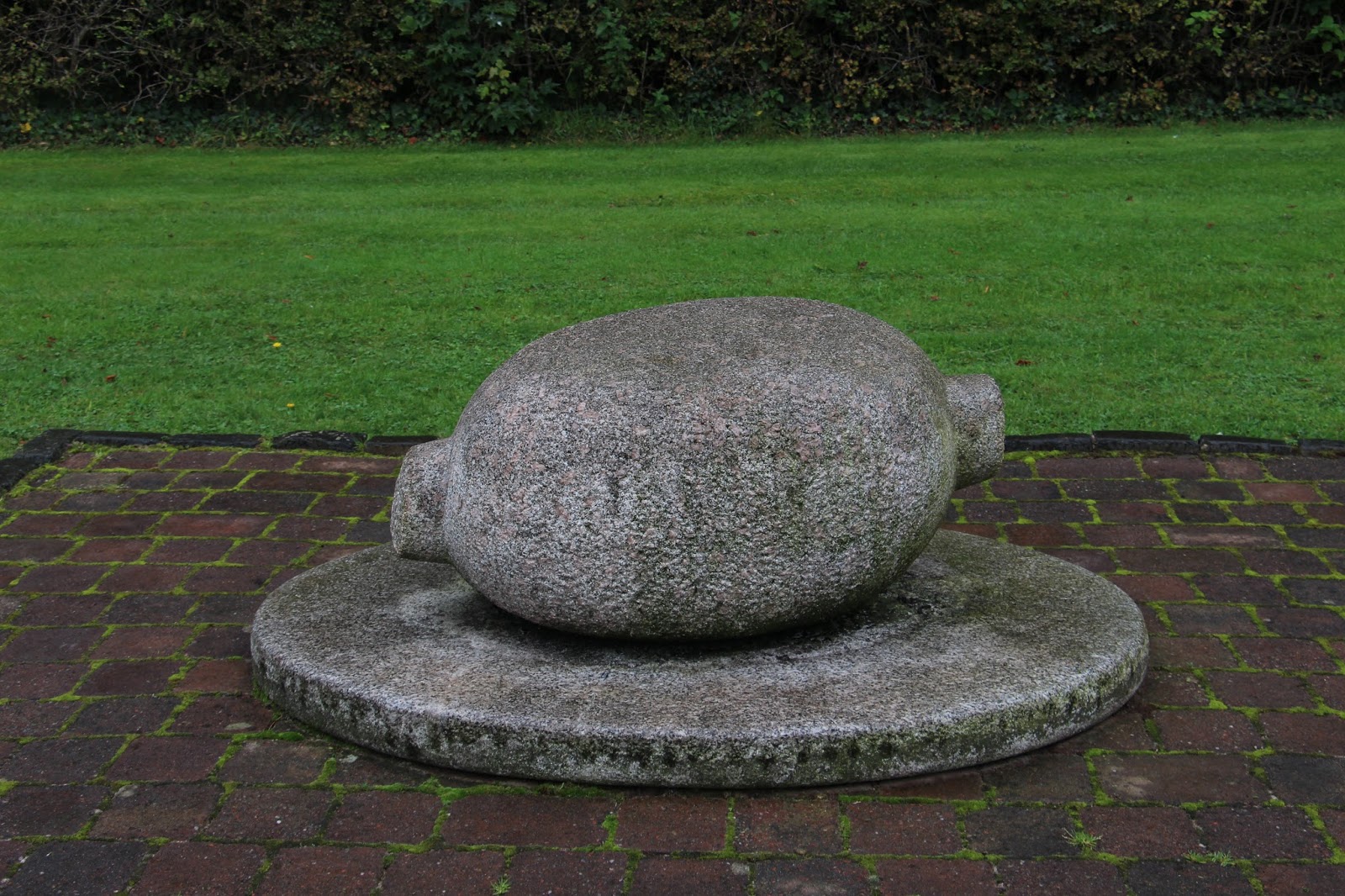
The Poet's Path walkway features a number of sculptures -- notably a huge version of Burns's "wee tim'rous beastie" and a stone haggis. 
Fred and I walked on Brig o' Doon, the famous bridge that provided the setting for Tam o' Shanter, one of Burns's most famous works. The narrow, arched footbridge is such an iconic landmark that it even features on £5 Scottish notes.

The museum had manuscripts, art, and lots of artefacts. One of the treasures is the "Kilmarnock Edition" of Poems, Chiefly in the Scottish Dialect, published on July 31, 1786 . It was the first volume of poetry and on to be written by the man who was later to become Scotland's National Bard. Another treasure was a chair that was made from wood taken from the Kilmarnock printing press, which produced the treasured volume.

Our Bed & Breakfast "Bythesea" is charming, and very comfortable. We weren't sure what to expect from Scotland, in terms of accommodations. But if this is any indication, we will be very pleased indeed. I'm already looking forward to the full Scottish breakfast tomorrow...

Kilmarnock Edition

Chair made from Kilmarnock printing press wood

Robert Burns (Jan. 25, 1759 - July 1796)